
Suggested Packing List for Motorcycle Helmets & Gear
Motorcycle travel in Nepal is a little different from most destinations. Speeds are lower than usual and our routes offer interesting opportunities to step off the bikes to look around and interact with locals. We have learned much about what works, what doesn’t, and how to keep our riders as comfortable as possible without sacrificing protection.
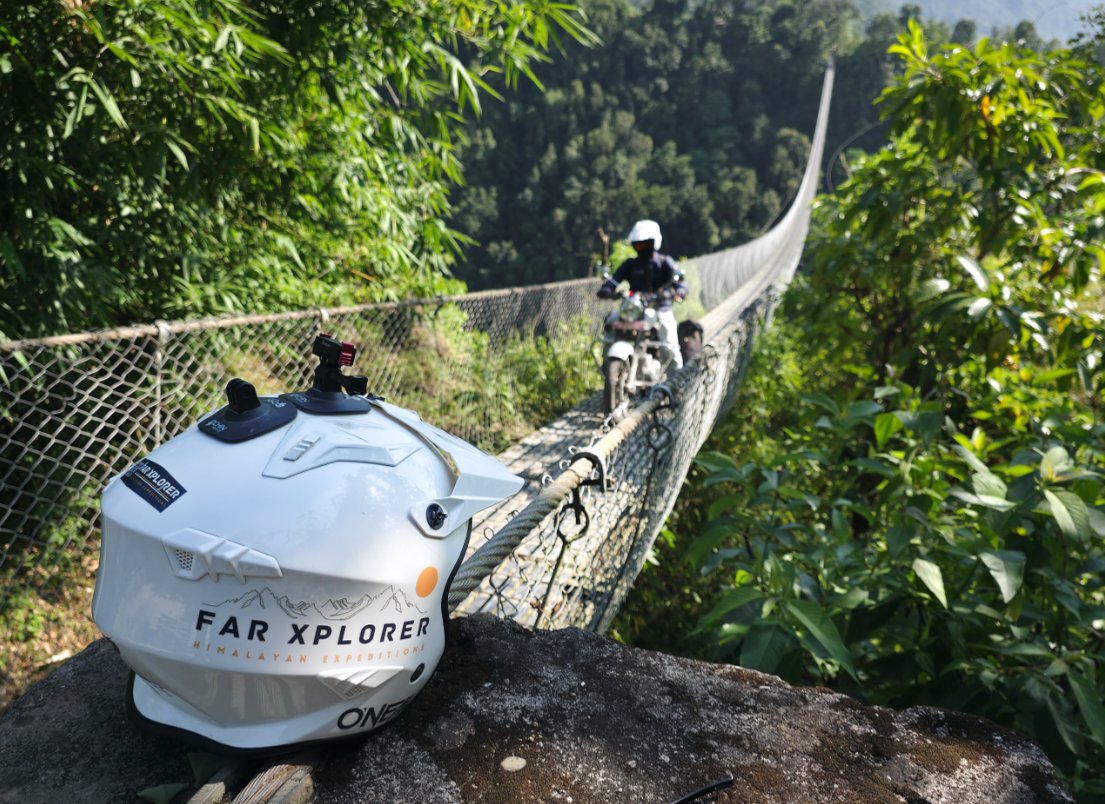
Helmets
Our repeat travelers agree a full-face helmet is the most protective, but an open-face (3/4) helmet sometimes works better for our rides. They’re cooler, offer a better field of view, make for easy photo taking, and because we are on and off the bikes a bunch, they’re a bit less cumbersome when talking to travel mates or interacting with locals.
We use them as guides, but understand why you may want more full-coverage protection.
Please wear what you find most comfortable. For rides in hotter weather (spring), modular or full-faced helmets will likely be quite warm as the speeds may not force air into the vents very well. A traditional adventure helmet works great as well.
Flip-front modular helmets: We have noticed that most people to bring modular helmets spend a disproportionate amount of time with the chin-bar raised to improve ventilation, or just get a better view. Nepal is perhaps not an ideal place for modular helmets.
Half Helmets: While we concede 3/4 helmets offer the minimum of protection, we do not permit the use of half helmets. There are new initiatives in Nepal to promote better head protection and half-helmets may draw the attention of the authorities at checkpoints.
SPECIAL CONSIDERATIONS FOR RIDING IN NEPAL
We spend considerable time off the bikes walking around small villages, monasteries, and other attractions where bulky motorcycle suits may not be the most comfortable. Please keep that in mind.
Spring temps in the lowlands can easily exceed 100°F. Plan accordingly. Springtime rides in full Gore-tex suits can be very uncomfortable at the lower speeds we travel, and the time we spend off the bike. At the very least, reconsider heavy Gore-tex pants in warm riding seasons in Nepal.
Fall temps in the high Mustang Valley can drop as low as 45°F during the day.

Jackets and Pants
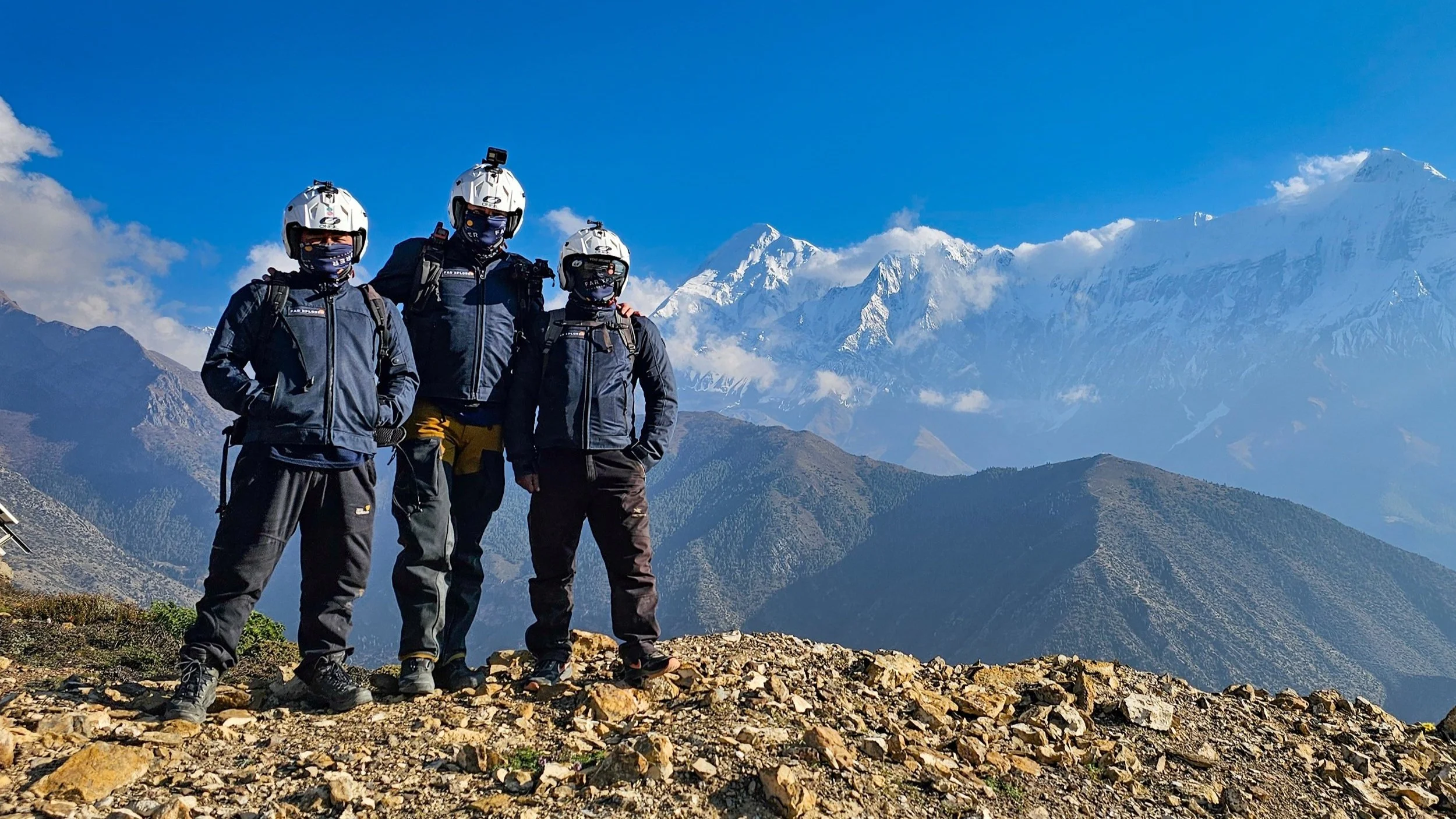
We require every rider wear a proper motorcycle jacket at all times and recommend light motorcycle pants, or something suitable to adventure travel.


Boots
At a minimum, we recommend riders wear light touring boots with motorcycle specific protection. Super heavy motocross boots are not as ideal for days with a lot of walking, but again - wear what makes you most comfortable. Please remember, there is a good bit of walking on our adventures.
Please do not wear hiking boots on the motorcycle. These are off-road expeditions in the Himalayas. Proper motorcycle foot protection is essential.

Bags and Panniers
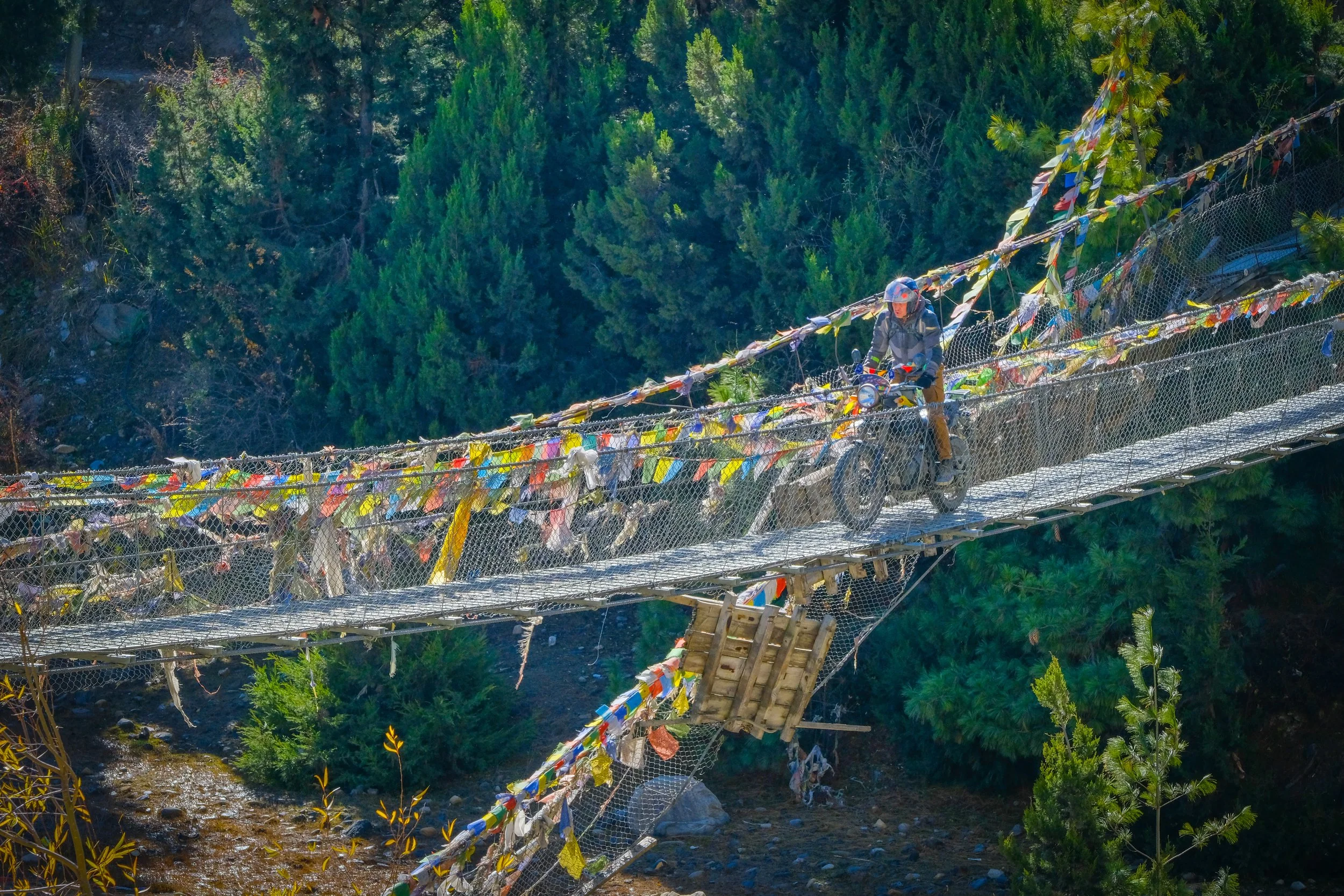
You do not need to carry any luggage or gear on your bike and frankly, they’re not well suited to it. A light backpack is the ideal solution for cameras, water bottles, and rain gear. It’s also a great place to stash a hydration system. Our support truck is never far away, but we recommend keeping essentials close at hand. Plan to keep your pack as light as possible for your comfort and safety.
Some riders bring small tail bags, which can be very convenient for rain gear, insulation layers, etc.

Frequently Asked Questions
What about?
Klim Badlands GoreTex suits: While not bad for fall trips, this popular suit is probably too hot for spring in Nepal. The pants may be too bulky for general travel riding and time off the bikes. Keep in mind, the roads in Nepal demand lower speeds with less air venting into heavy jackets and pants.
Mesh Jackets: Mesh is perfect for spring trips when temps often reach the upper 80s. They are not quite warm enough for fall rides in higher elevations in the Mustang Valley.
SELECT YOUR COLORS CAREFULLY
We will pop around thousands of blind turns on the mountain roads of Nepal. We will zip by thousands of side roads and intersections. If you are dressed like a shadow, our lead guide will ask you tuck in behind him for the full ride. Visibility is critical in many ares of Nepal and black on black is a dangerous combination. You don't have to dress like a traffic cone, but be selective when chosing your colors.
We also like to document your travels with photos and videos. Even with a bag full of professional cameras, drones, and video equipment, capturing a rider dressed in all black is virtually impossible in the high-contrast environments of the Himalayas. We may not be able to provide good images of riders in all black.