
Motorcycle Gear: What Our Guides Use and Trust (2026)
Our trips require a unique approach to motorcycle gear. While it’s critical to have enough protection to survive a tumble, it’s best to not over-gear. We spend quite a bit of time off the bikes, so heavy suits are often not ideal. Given the nature of the roads, our speeds are quite low, so venting is an issue on hot days as most suits need higher speeds to flow air.
Does it get hot in Nepal? Yes. Spring and early fall can see temps nearing 100F (38C)in the lowlands and mid hills.
Over hundreds of days of Himalayan travel, we have finally found what works best for us.
WOMEN’S SUGGESTIONS: While many of these items are offered in male-only variants, many items have women-specific options.

HELMETS
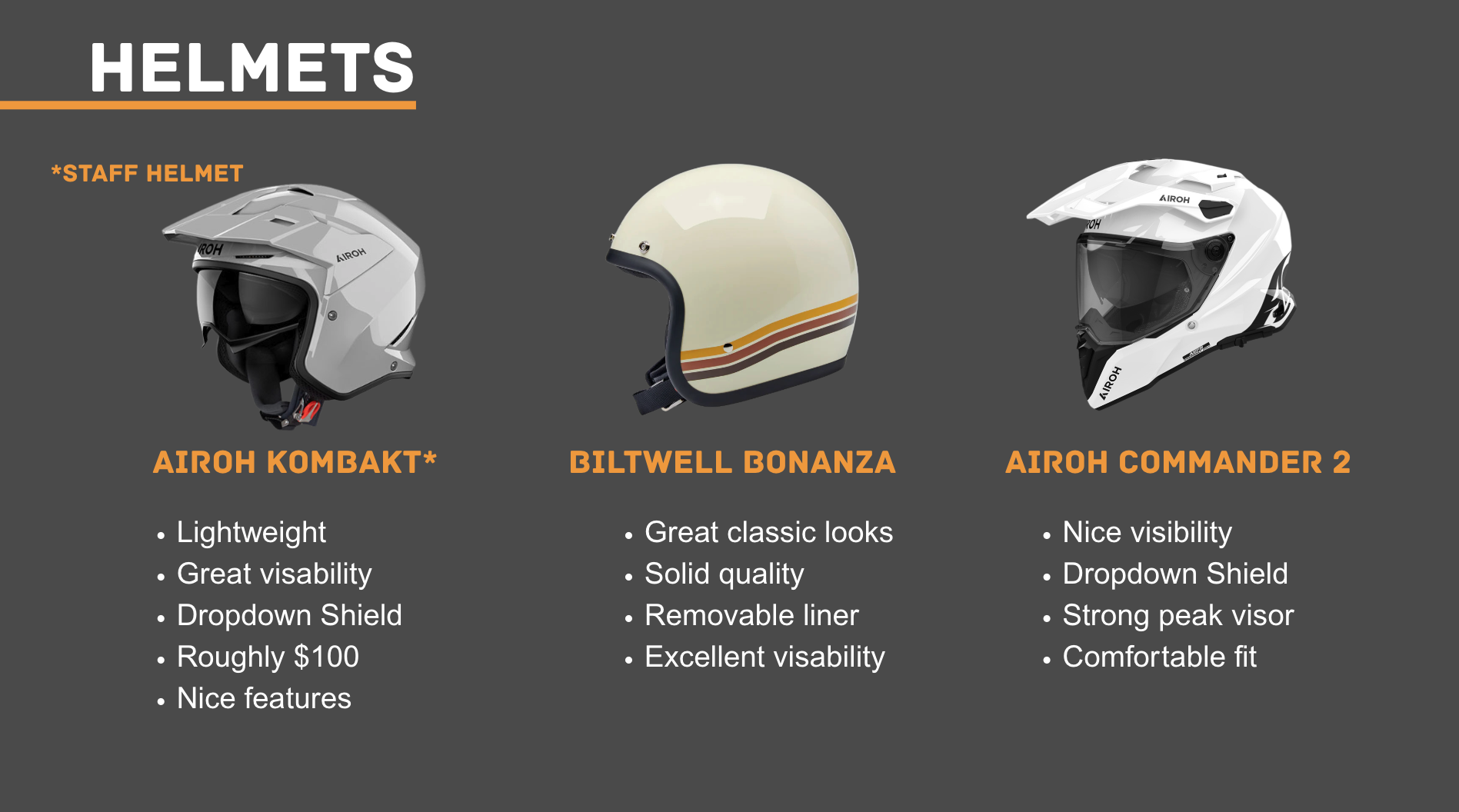
We prefer open-faced 3/4 helmets due to the improved visibility, venting, and convenience. We also enjoy the enhanced ability to communicate with locals (with a smile) and other travelers. We are aware they provide less protection.
Full-faced and modular helmets typically don’t flow enough air for hot days on small tracks. We also recommend “adventure” or “dual sport” helmets for those wanting more protection without sacrificing ventilation.
For 2026 our entire Far Xplorer road team will be wearing Airoh Kombakt helmets. We selected the Kombakt due to great features like a drop-down sun visor, quick-release buckle, and exceptional ventilation and breathability at slower speeds. The quality is exceptional for the value but they run a little small. The Airoh Commander 2 is our go-to helmet for our remote scouting trips with more seat time. The Biltwell Bonanza is a helmet we used for years and still love them for their style and comfort.
BOOTS
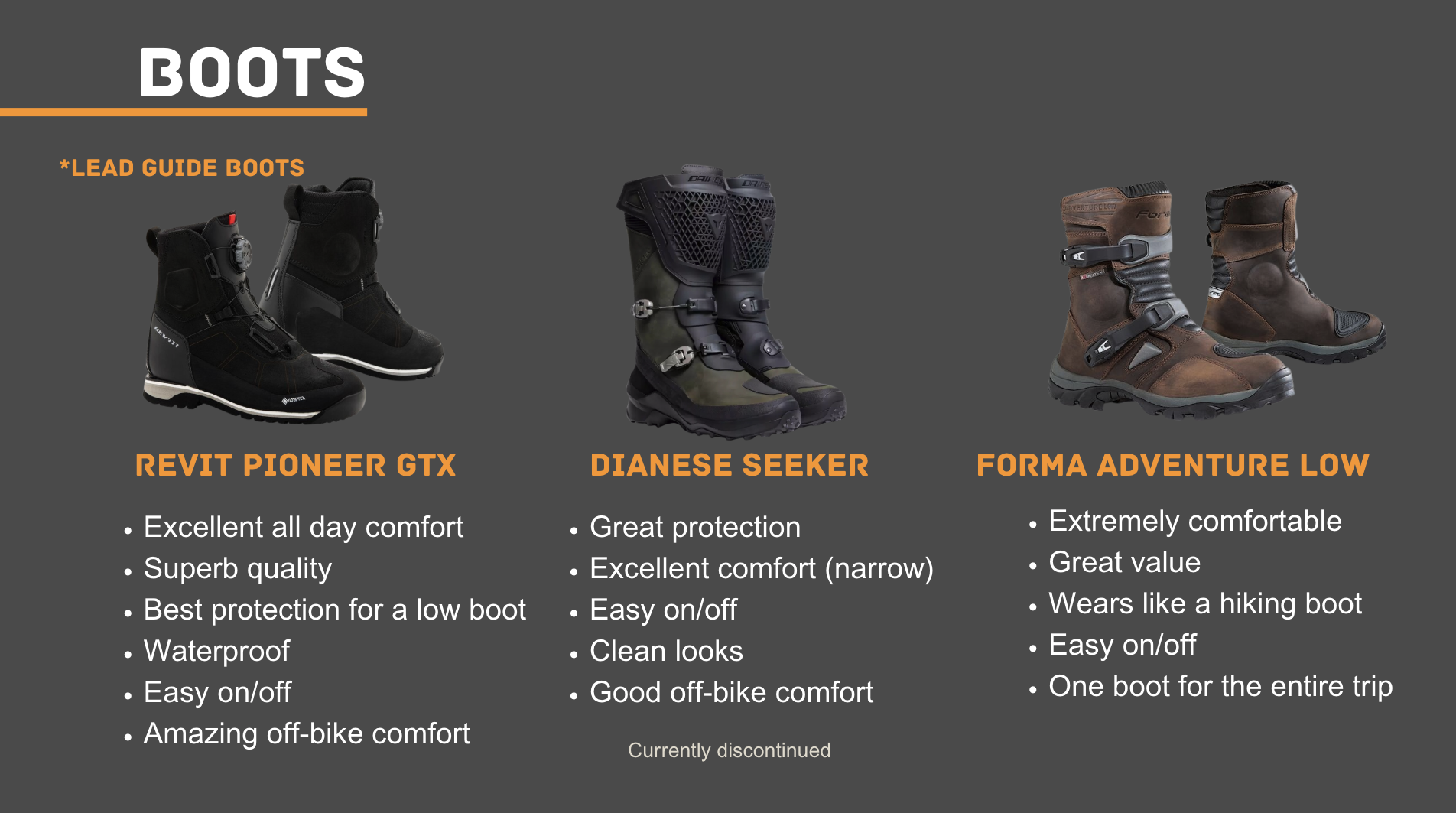
We ask all of our riders to wear motorcycle boots, but we are not fussy with our specific requirements. For the Far Xplorer road team, we demand all day comfort on and off the bike. We often wear our boots on domestic flights, around camp, and almost always from sunrise to sunset. We select boots suitable for long walks as there are plenty of them. It’s also important to have boots we can easily pack in a duffle bag without too much bulk and weight.
JACKETS
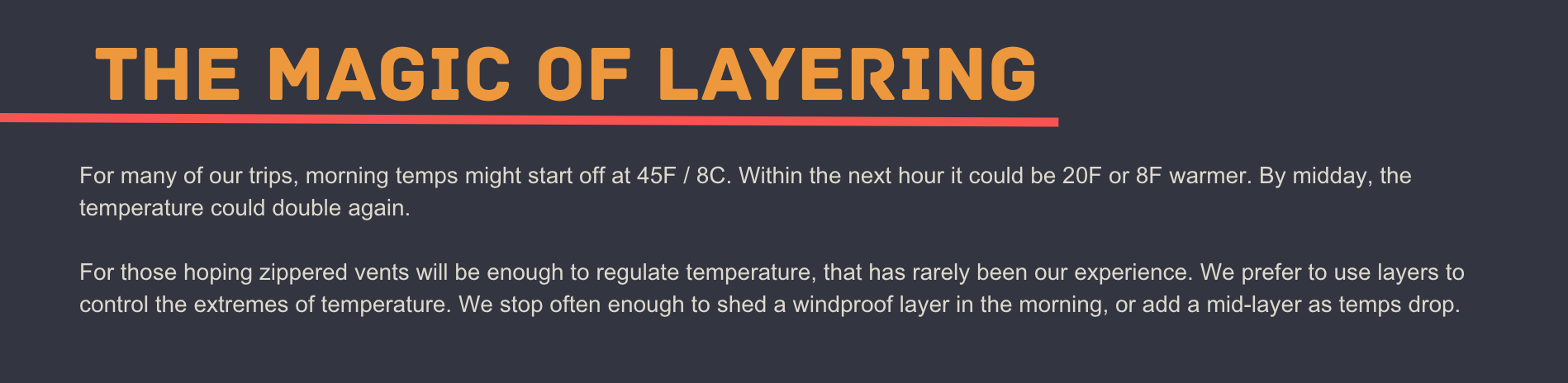
This is the most critical component and we have gone through a dozen jackets on the journey to finding our favorites. For us the key criteria beyond protection includes: Warm weather ventilation, all-day comfort, low weight and bulk for packability, and versatility for layering. All of us on the Far Xplorer road team wear the REVIT Eclipse 2 on our group trips and layer over and under as necessary. On our long and rugged scouting trips, we always wear Mosko Moto Basalisk and Surveyor jackets.
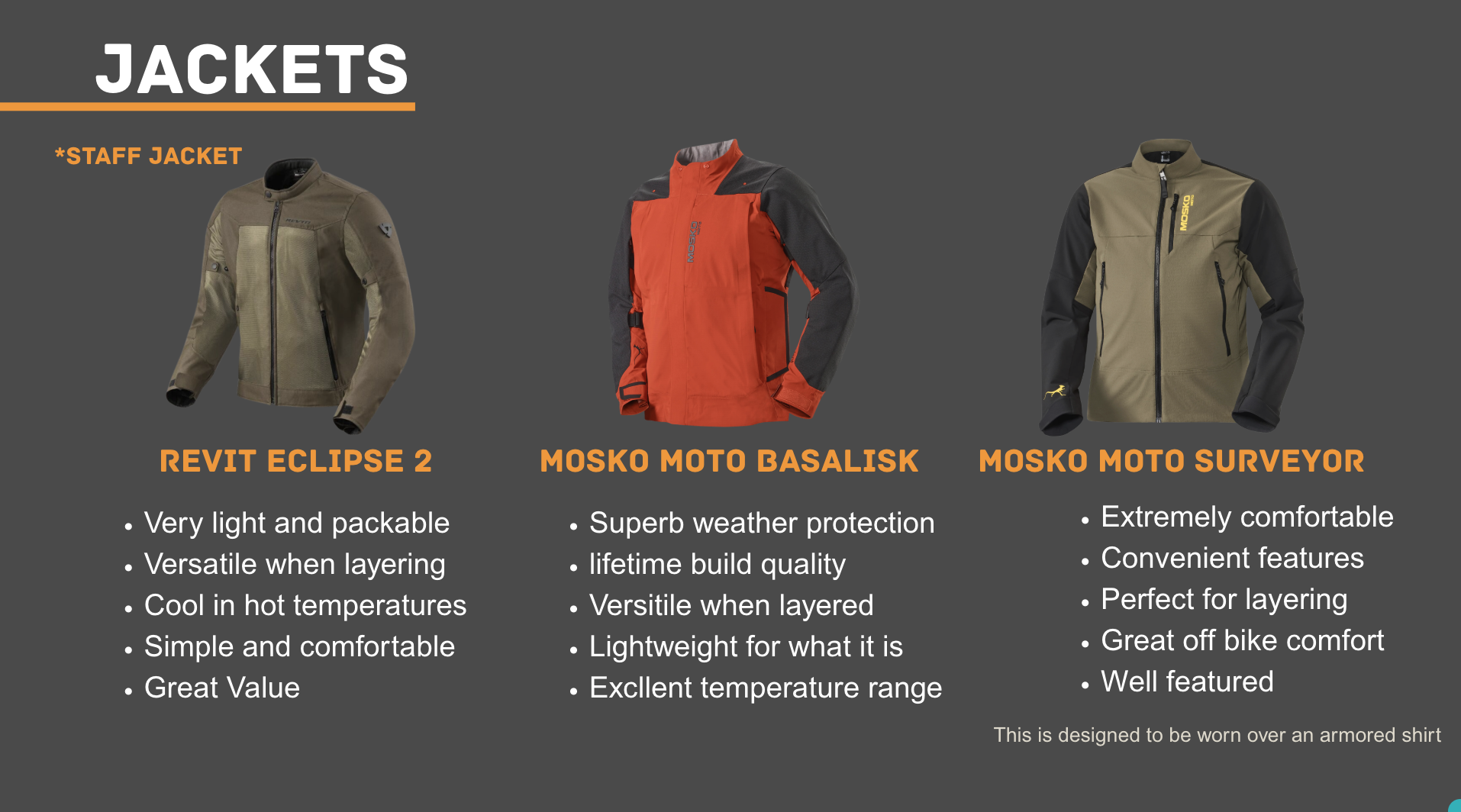
Mesh is an ideal style of jacket to wear on our warmer spring trips, and trips in the early fall month of October. One excellent advantage of mesh is the low weight and bulk, which is perfect for motorcycle travel.
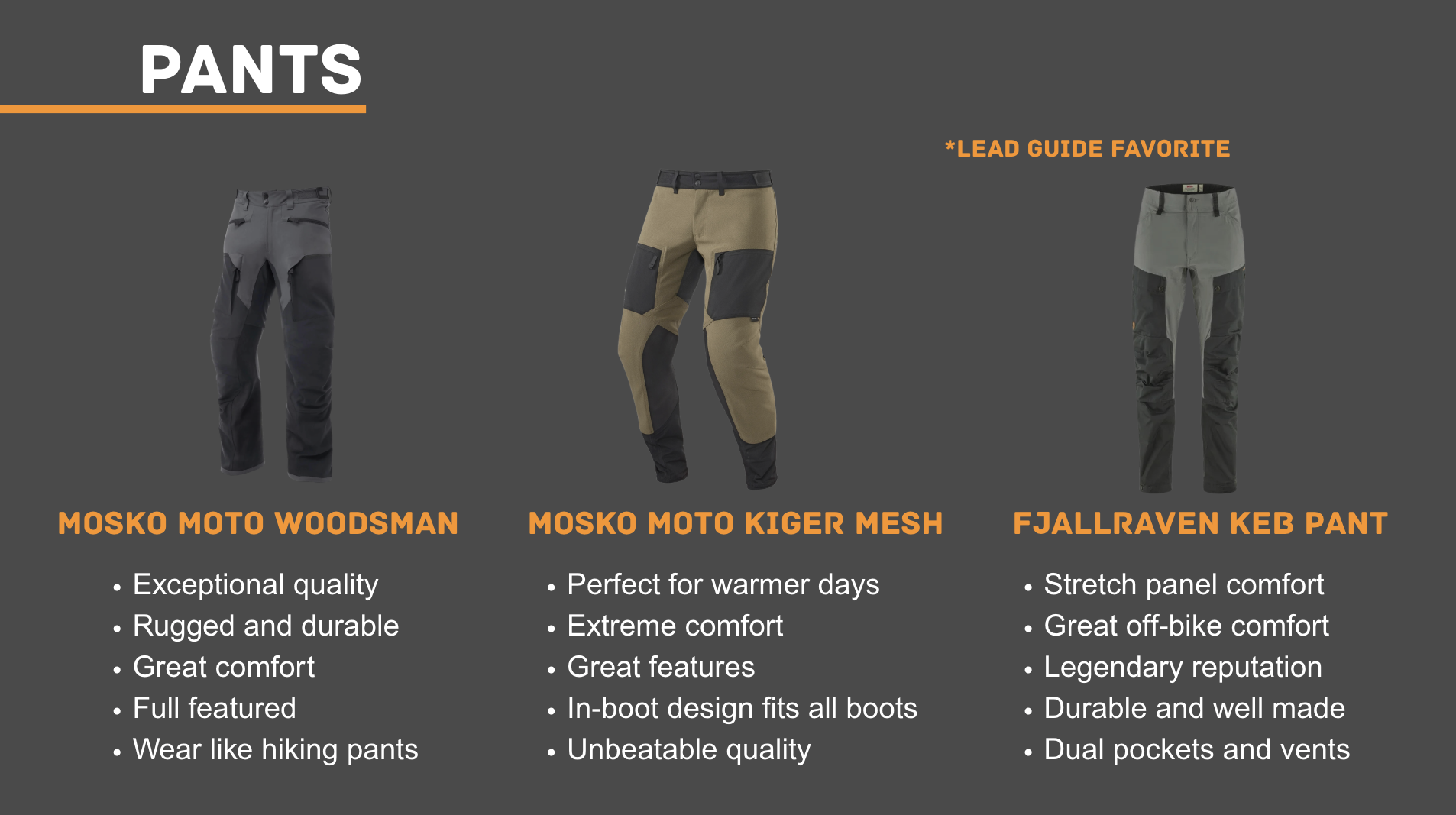
PANTS
Finding the best pants has been a long process. Over the years we learned this is where the battle of travel comfort can quickly be lost. Those who lean towards comfort and versatility tend to have the best success.
MAYBE NOT THE BEST CHOICES
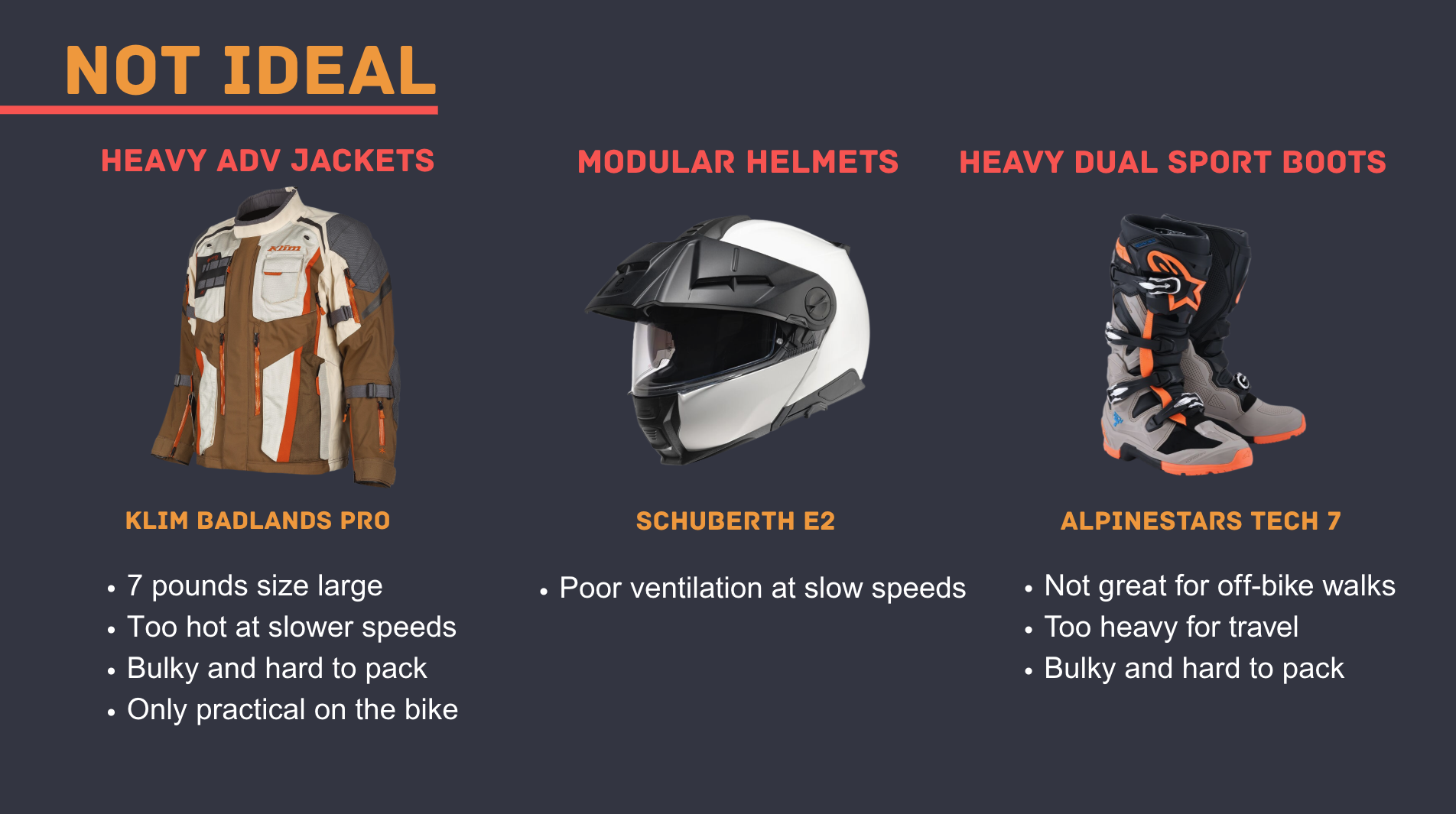
Over the course of hundreds of days afield we have experienced - what does not work well. This isn’t to say you should not bring this type of gear, but just know it may come with drawbacks.
HEAVY GORE-TEX RIDING SUITS - While robust and full featured GTX suits work well for many riders, for the warm and slow speeds of Nepal’s roads, we think these are simply not an ideal choice. At an average weight of 7.5 pounds for a typical jacket, and 6 pounds for the pants, we have also witnessed several riders suffer from the accumulative fatigue of wearing a heavy suit for 9-10 days. Then there is the challenge of packing 15 pounds of heavy riding suit to Nepal.
MODULAR HELMETS - It’s extremely rare for us to see riders with modular helmets wear them with the chin-bar lowered. They’re almost always popped up for better air flow and visibility. The majority of riders to bring a modular helmet on our trips have mentioned later they wished they had left it at home.
HEAVY TECHNICAL BOOTS - We’re off the bikes a bunch. If you have five pounds on each foot, you’re not likely to walk half a mile, up stairs, to see an incredible Buddhist monastery, or a cool view. And, by the end of ten days you will be knackered. They’re also no fun to wear on plane flights if required, and complicate an already challenging weight and packed volume calculous.

CHOSING YOURCOLORS
Few things make us as nervous as a rider clad in all black. On our routes we will pop around thousands of blind turns on narrow mountain roads. We will pass by thousands of side roads and intersections. If you are dressed like a shadow, our lead guide will ask you to tuck in right behind him for the entire ride. Visibility is serious business in Nepal. Leave the all-black to Ninjas, Johnny Cash, and Batman.
