TAKSERA - A Hole in Time
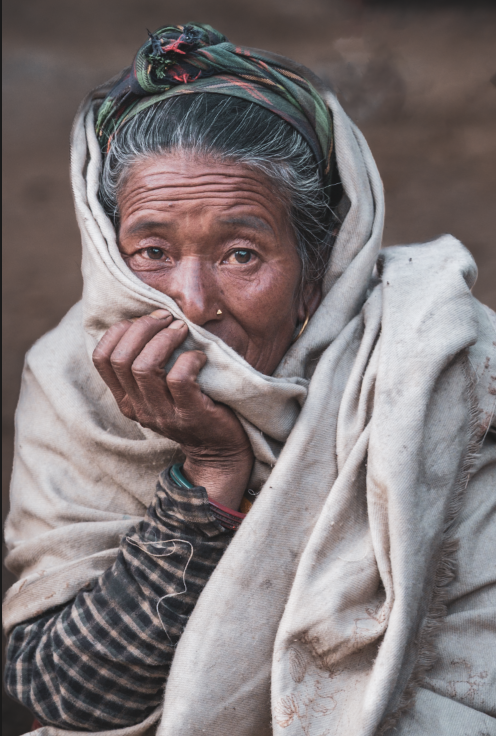
In 2017 during one of my first explorations of western Nepal, the rear hub bearing on my Nepali travel mate’s 350 Bullet failed. Sitting roadside as he used my bike to haul his wheel to a nearby town, a shepherd in a heavy woolen coat approached, clearly curious about a strange man and his one-wheeled motorbike. A cold March wind raced down the valley prompting me to zip my jacket tight around my neck. The shepherd seemed unfazed by the chill and simply crouched down allowing the long tail of his heavy coat to drape over his bare legs and feet. With hands tucked into opposing sleeves he all but disappeared in a thick shroud of felted wool.
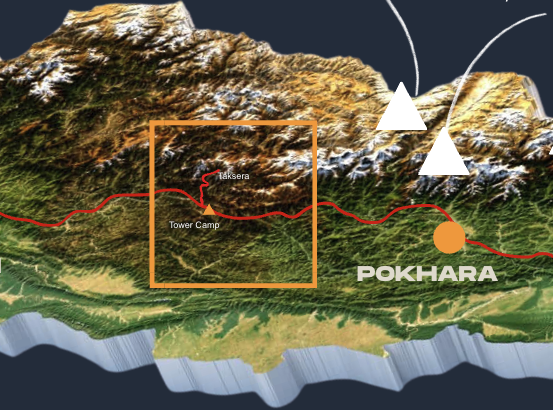
You would know this exact spot. It was just a mile from the scene of our first genuinely cold night after a longer than expected day. This was near what we call Tower Camp in the district of Rukum.
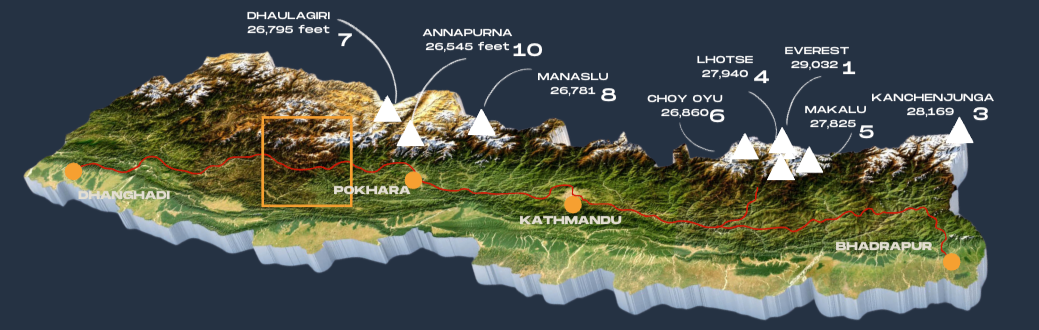
The humble shepherd and the terraced village where he lived became somewhat of an obsession. Over the next year or two I made two trips there. This at a time when the ride from Pokhara was a four day journey on rough two track. Quite a different experience from the wide paved road we enjoyed on our trip. During one of my visits to Lugum, a local teacher asked me, “have you been to Taksera?” I had not even heard of it. In typical Nepali fashion the teacher said, “It is just over this hill.” Even you know after one visit, nothing in Nepal is, just over the hill.
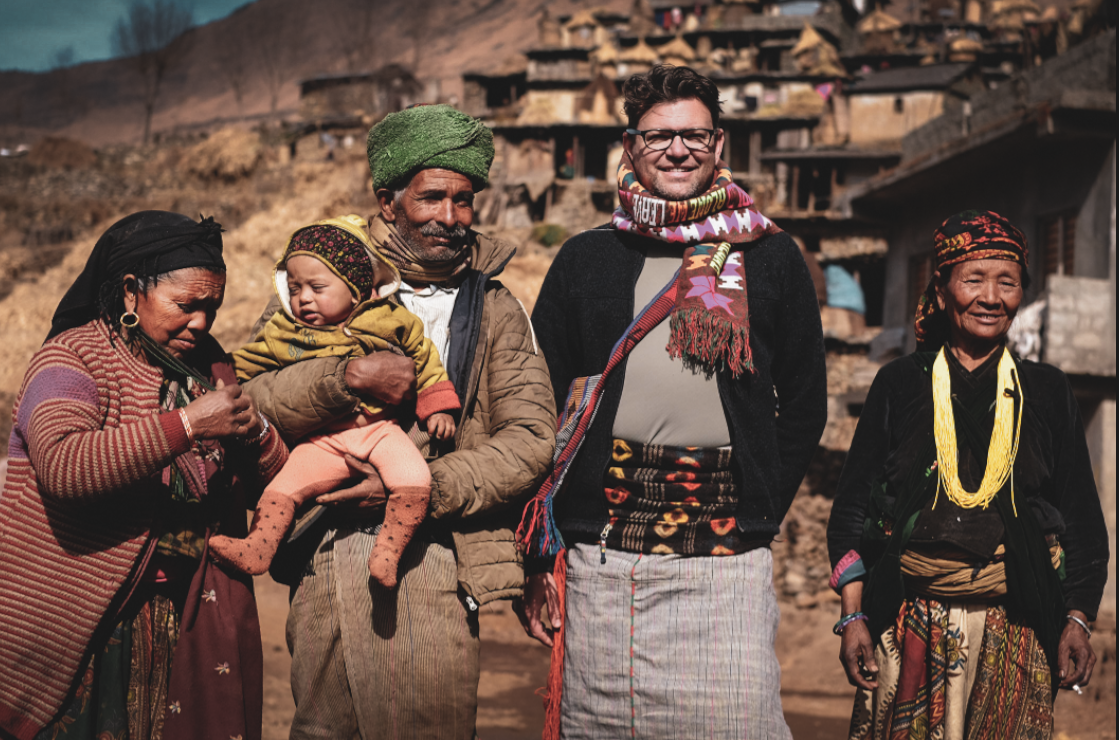
On a subsequent visit, Rajkumar and I teamed up with another Nepali friend and made the trip - just over the hill. Rising to over 11,000 feet, the tractor-width road scratched into the hillside consumed an entire morning, but we made it to Taksera. It was one of the most significant discoveries of all my Himalayan travels.
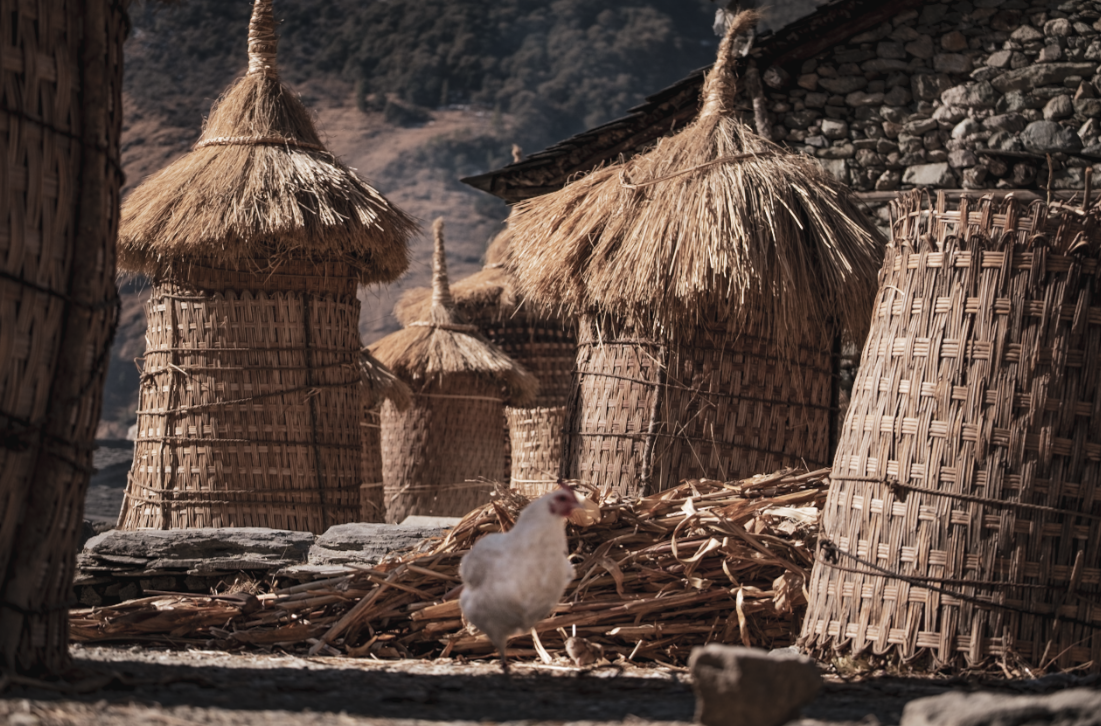
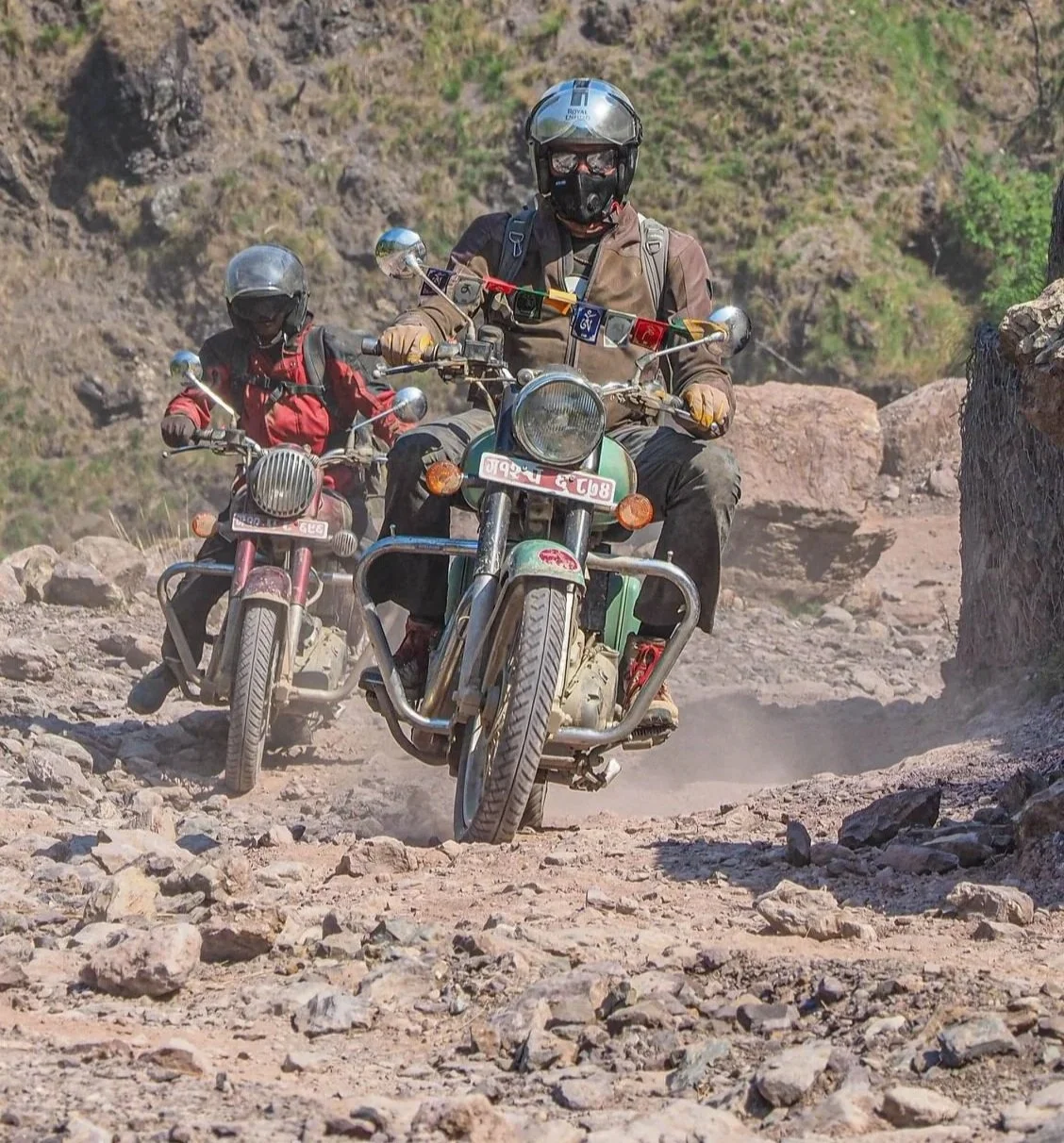
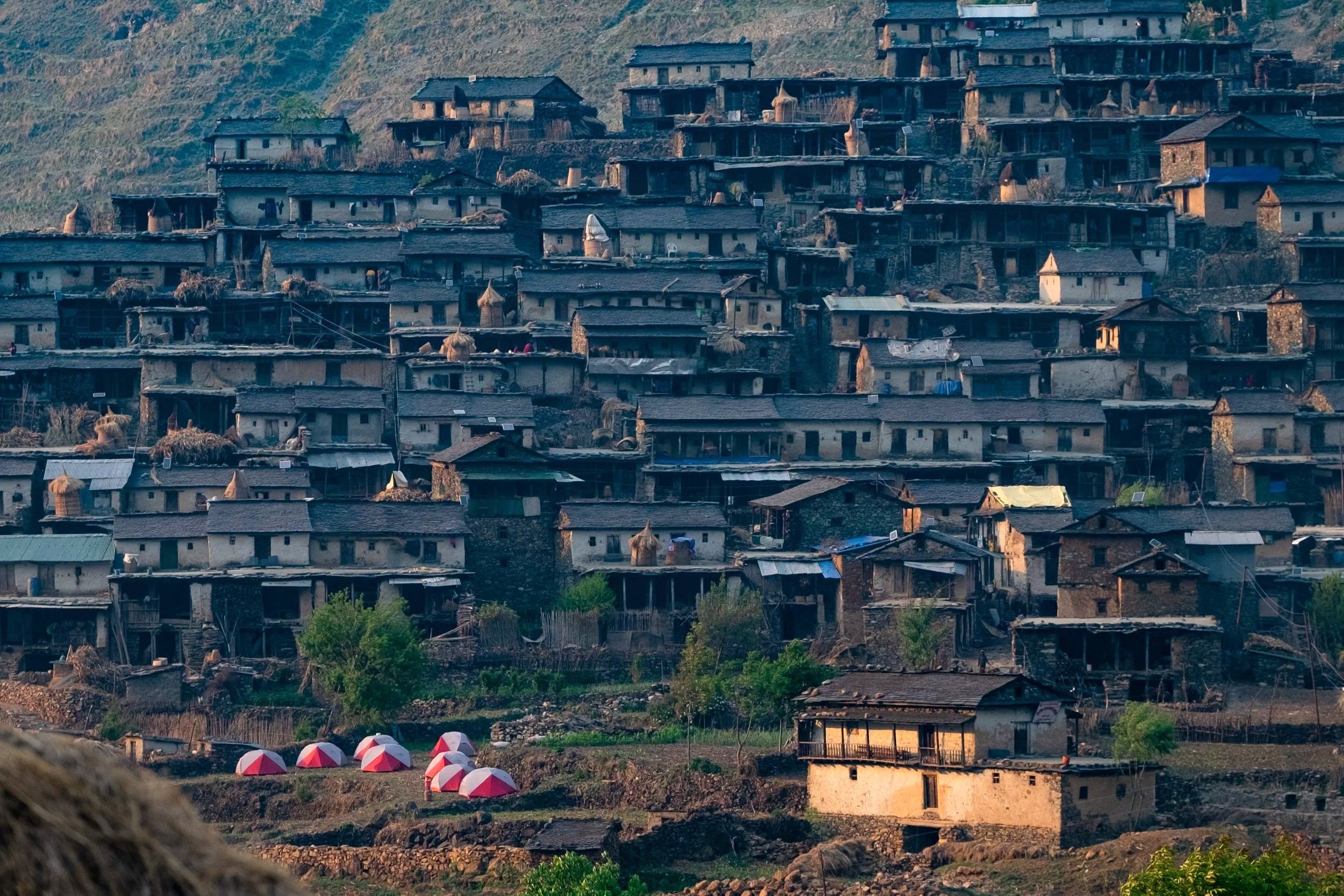
Photo right: Rajkumar and I barely made it to Taksera on our first try in 2018. The shelf road in spots had 2,000 foot drop offs, landslides, washouts, and ruts as deep as corn furrows. The road, which was barely a road, felt like it was made in great haste. We would eventually learn why. Photo below: We took two groups to Taksera in the fall of 2019. David Page was on one of those trips. The round woven baskets are corn “silos.”

When a Coat is More Than
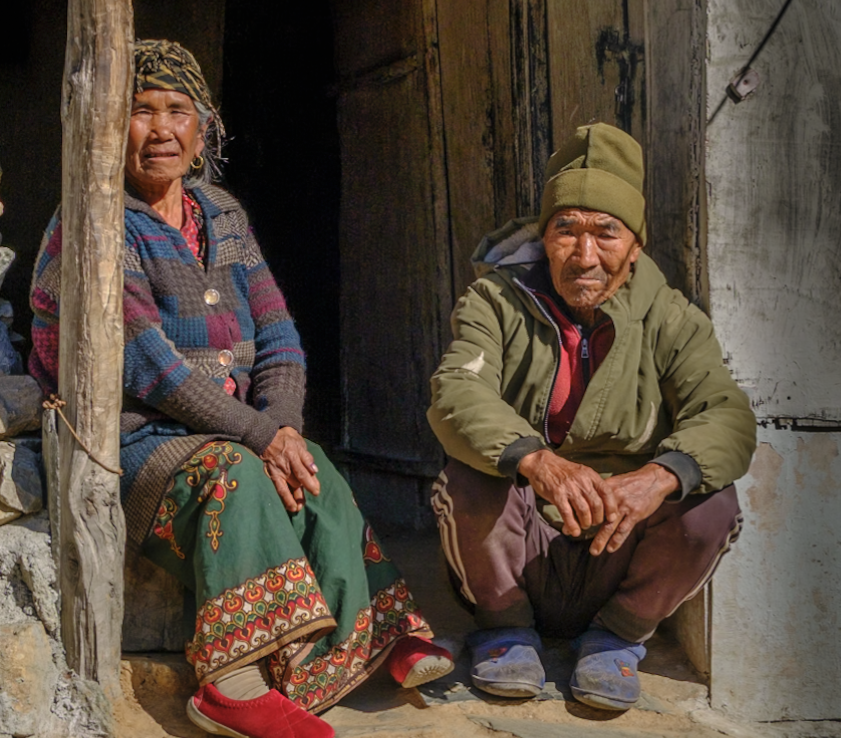
I returned again in 2019, this time with my friend Kieth. A 25 year antarctic guide and National geographic photographer, he was the perfect travel partner. On arrival in Taksera I set out to learn more about the local culture and specifically the handful of heavy woolen coats I had seen on the backs of shepherds, farmers, and old men strolling local walkways. There weren’t many, but I was still fascinated by them.
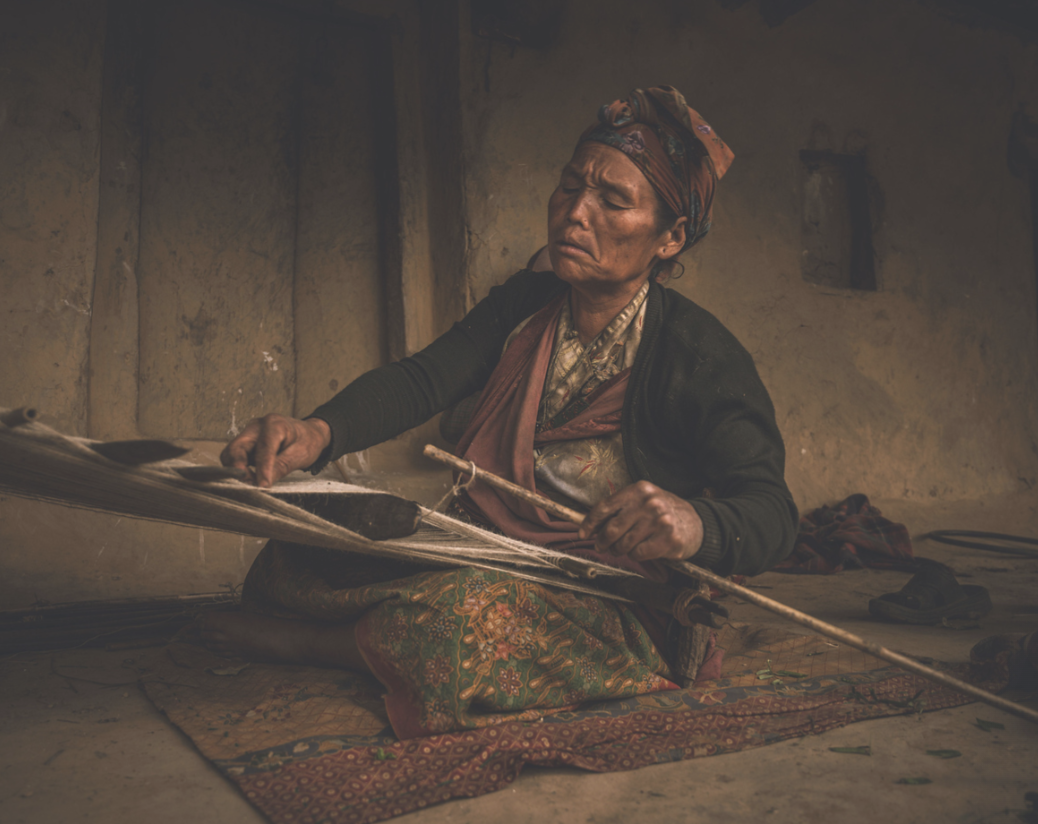
My quest for information led me to the house of an older woman, her hands crooked and knotted from a lifetime of toil. With the help of the school headmaster as my translator we dove into a series of questions that almost immediately shed light on why so few coats existed in the community. The old woman spoke of a dearth of men to wear them, too few sheep, and most notably, a lack of women, still living, with the knowledge to produce them. She went on to say that many of the coats I had seen were likely made in part by her, “when we were young.” This opened up an entirely new volley of inquiries. How old are these coats? How many women were involved in their creation?
Two months. That was the answer that dropped my jaw. She went on to say that each coat not only took months to make, but with the collective assistance of half a dozen women. Her son, a shepherd himself, was quick to interject his own involvement and said, “sheep don’t give their wool for nothing.”
Within a few minutes of learning about the rarity and uniqueness of Taksera’s coats, and perhaps unable to restrain the westerner I am, I quickly asked, “How can I get one?” As soon as the words left my lips, I wished I could shove them back in my mouth. But, the request had been aired and happy faces made long. The woman simply wagged her hands in the air and said, “There is no one left to make them.”
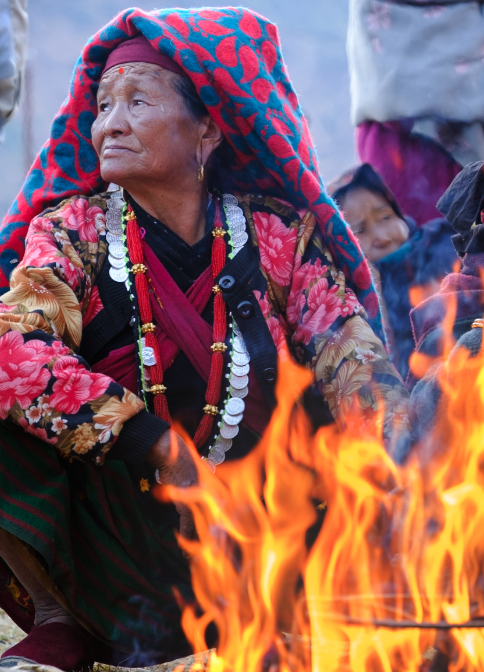
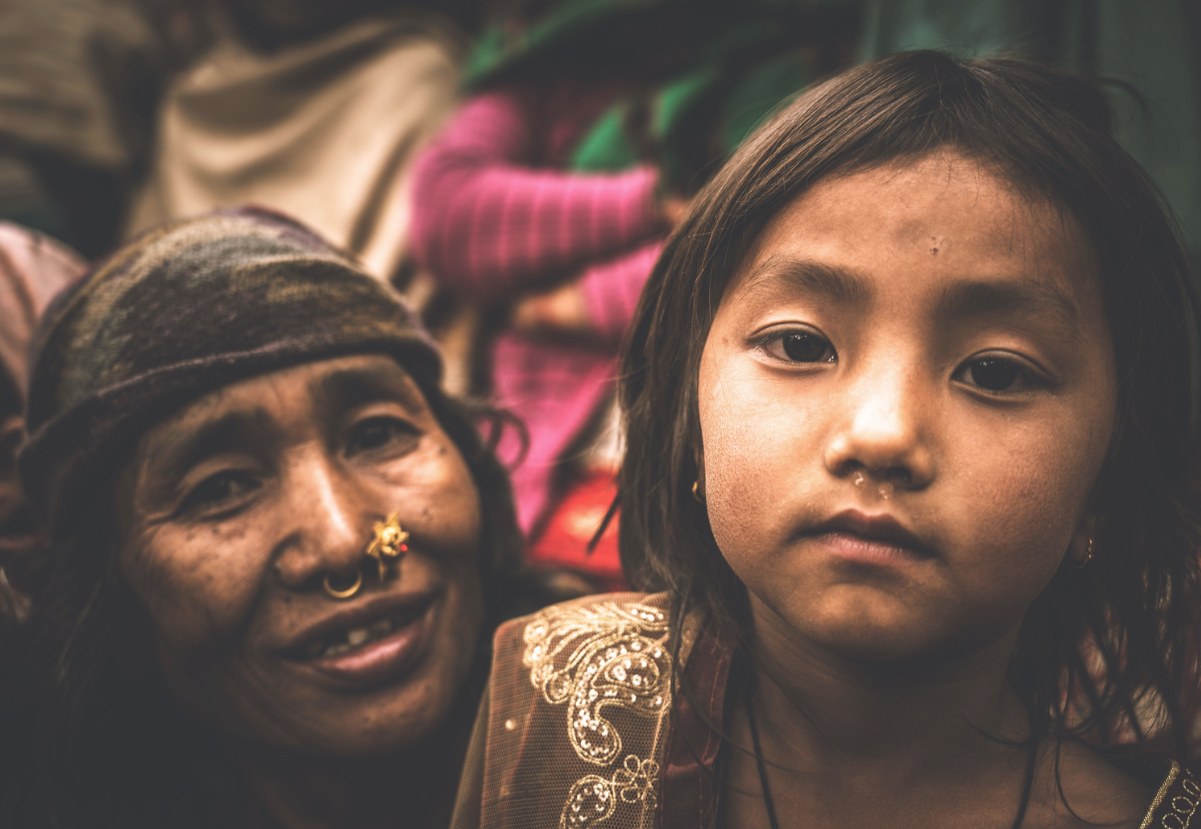
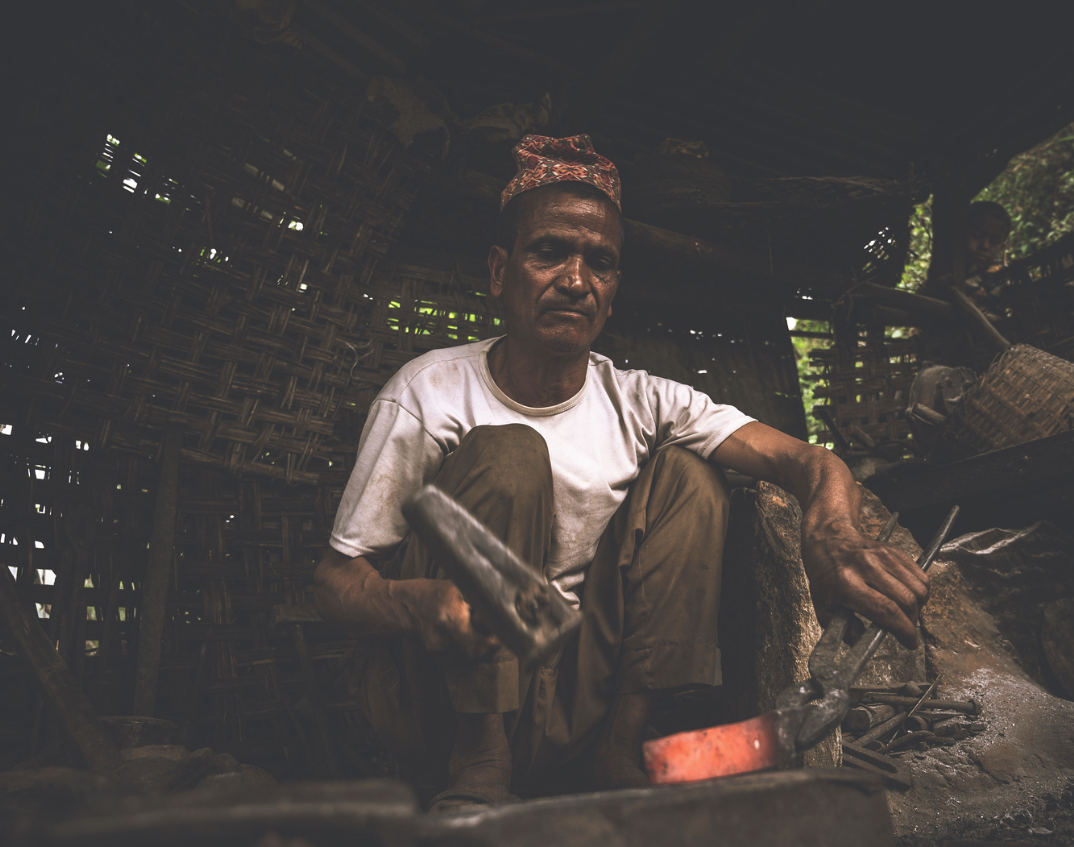
Photos Below: These were shot by David Page in 2019 during our first group visit to this village.

Bill’s New Coat
Every day of that trip delivered more amazing backstories and layers to this remote village. We learned the oldest homes, still in use, were built in the late 1500s. At its peak, as many as 5,000 people lived in Taksera. And yet, walking amidst the narrow pathways, it was obvious time had taken its toll. Only 800 remained, and apparently none that could make a woolen coat.
In the coming days, a dozen people approached to show us various scarves, bags, shawls and textiles they had crafted. Buzz was building, and then the old lady with a tangle of fingers invited us to have tea. When we arrived, a small klatch of grannies, aunties, sisters, and daughters had gathered. Talk of a coat soon followed. It seems one of the village elders was unaware coat making had arrived at the brink of extinction. He felt action had to be taken. A committee quickly formed, more tea was brewed, and fresh vigor pulsed through the community.
Soon shepherds were involved, the mayor interjected his ceremonial approval, and with progress now unstoppable, the westerner once again placed his foot in his mouth with the question, “How much?” Blank stares I thought were spawn of my indelicate question were in fact the face of genuine puzzlement. No one had ever purchased a coat. They were always made collectively, but as a family possession intended to be handed down for generations. The making of a coat was something of a barn raising. Some were crafted as dowries, swapped for houses, traded for herds of sheep or land, and even offered as treaties between clashing clans. A purchase? Leave it to the American to invite such raw consumerism into the fold. Eventually a price was settled. It was a sum that would have made Brooks Brothers proud. It was, however, to be expected of a garment made with a dozen hands and two months of labor.
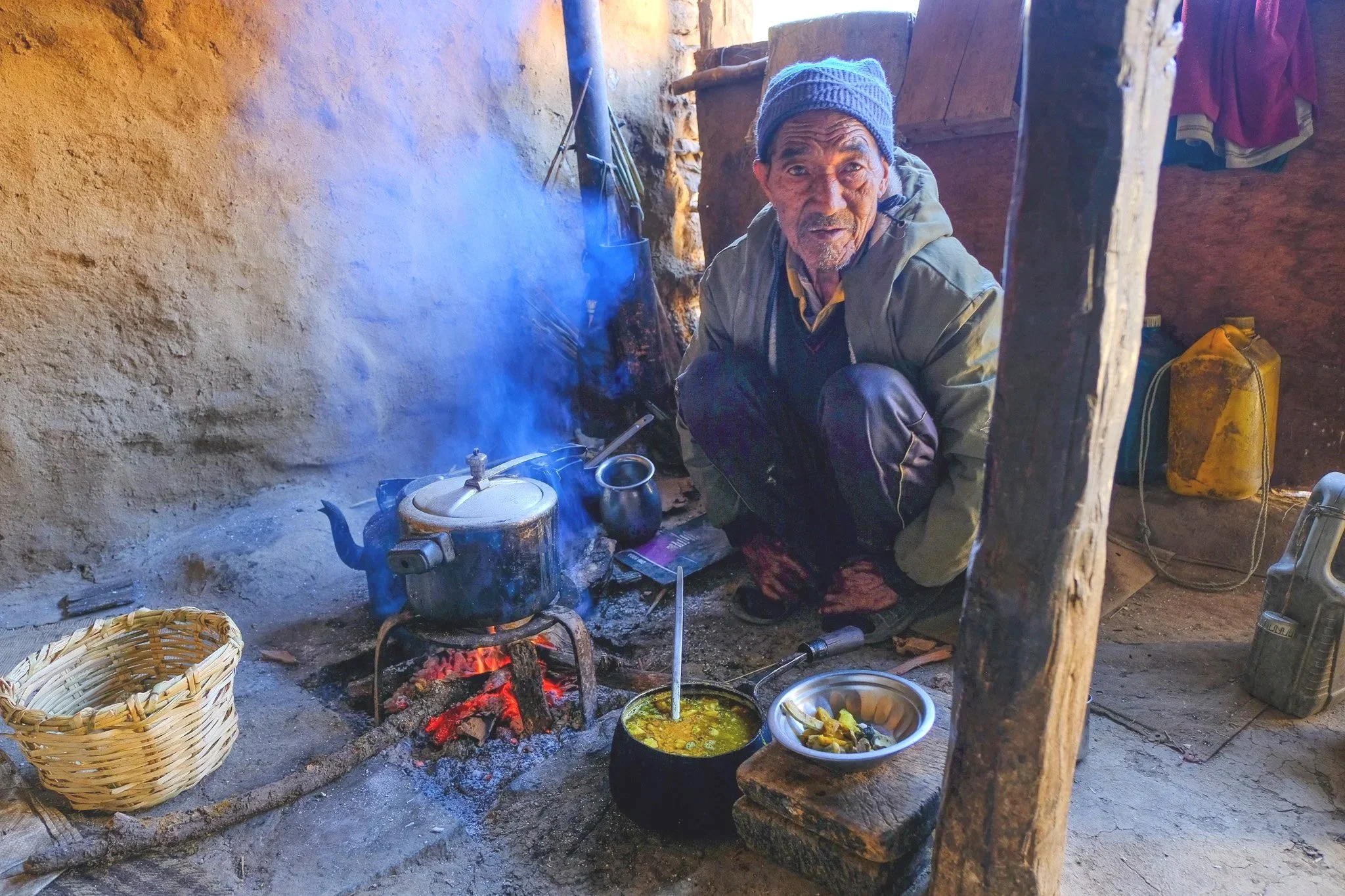

This is one of the sages of Taksera’s now reborn coat making community. Photo taken Nov 2024.

It was quickly decided this opportunity would be a great way to reboot Taksera’s dormant coat making network. Young girls were paired to older women still aware of the process, albeit loosely. A plan was formed and before long Keith and I knew this couldn’t be a one off. To truly bring this cultural treasure back to life would require more than a single commission. Keith was soon fitted for his new coat. The commitment for a second piece brought even more energy to the neighborhood. Why not a third or fourth? Hell, let’s do six. That would not only keep the ladies hard at work, it would cement the resurgence of the craft and allow dozens of young women and girls to learn this nearly forgotten facet of their culture. There was also a clear need for a communal infusion of money. With our pockets emptied of all the rupees we could muster, and a promise to return with more stacks of cash, Keith and I packed up and headed back to Pokhara.
The following spring I made the arduous return to Taksera to collect our unusual order. Along the way I had resigned myself to the possibility that as soon as Keith and I crested the hill on our way home the whole project could have fizzled spectacularly. Or, we could be the proud owners of poorly made replicas of a once proud traditional coat.
Arriving in the village center, amidst a full-blown celebration fit for a dignitary, I was presented with six stunning coats, each smelling of boiled wool and a hundred kitchen fires, an aromatic reminder of where these artifacts were made. In the ancient homes of an ancient people.
Your new coat, is one of those six. A prize I have long coveted. A seed once saved and planted to regrow culture and pride in a place far away. A place you almost visited, it was just over the hill.
War, Wool, and the Defiance of Bullets
It’s impossible to visit a place like Taksera and not get scooped up and ushered into the warm and dark hollows of someone’s home. I have learned to bring tea, a gesture always met with resistance, but accepted with graciousness and genuine need. One day while talking to one of Taksera’s original coat makers, she told me a most remarkable story, one that even shed light on the newly built, but poorly constructed road into town.
From 1996 until 2006, Nepal was thrown into turmoil with a deadly civil war. As the 250 year old monarchy began to breathe its last, communist insurgents from a budding Maoist movement had started recruiting anti-government agitators in the rural corners of Nepal. As rebel forces grew in number, they needed places to hide, and the rugged valley where Taksera was located provided the ideal stronghold. Nepal’s armed troops were easy to spot in the open hills, their steep slopes dotted with farmers and shepards doing their best to just stay alive in the fray.
Several women told me that each day during the war, their sons, fathers, and husbands would dawn their heavy coats and head into the hills to eek out their meager living. They firmly believed the coats that protected their ancestors for generations would not fail them. Bullets it was believed, could not penetrate Taksera wool.
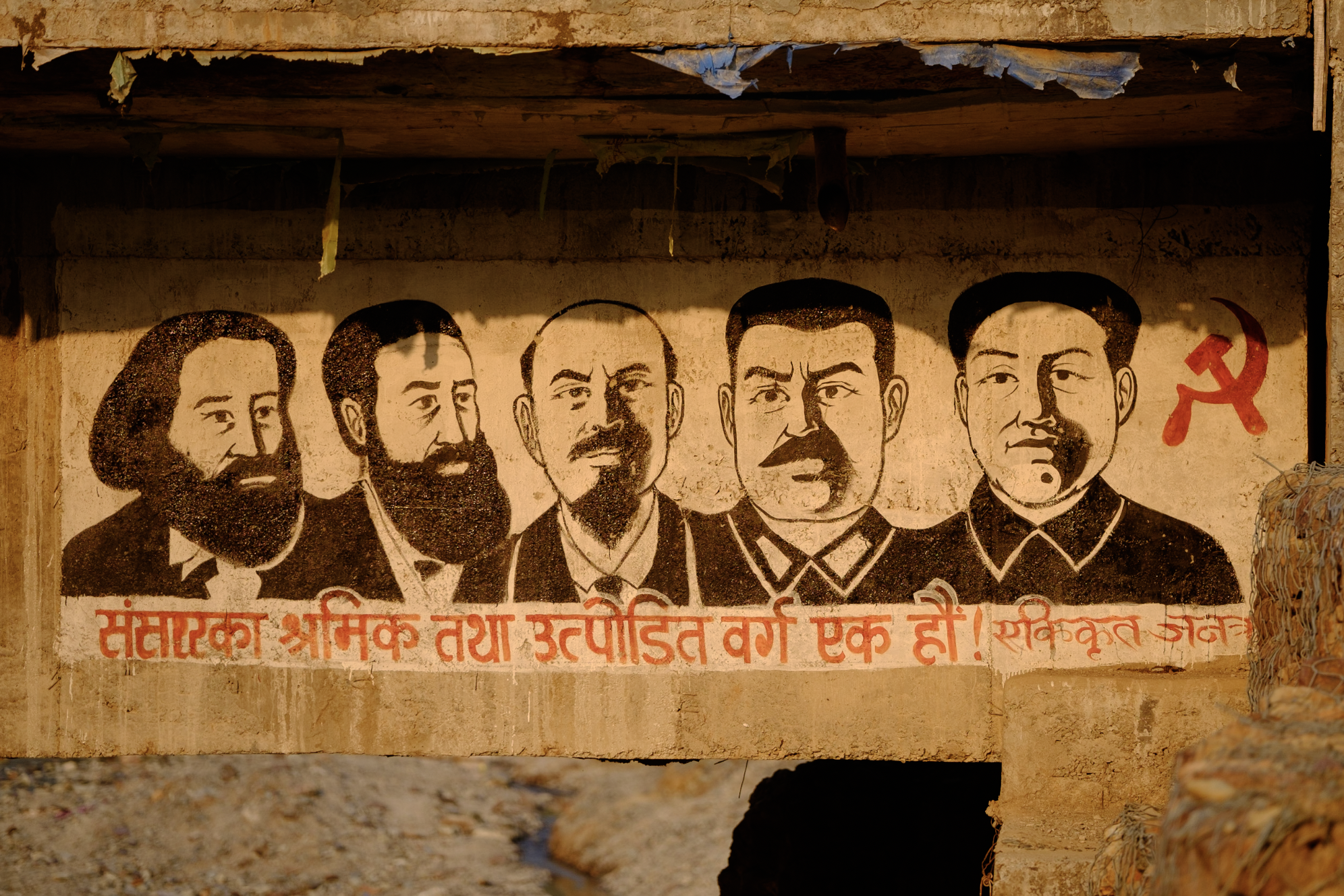
This mural is painted under a nearby bridge, not far from a small Nepal army outpost. The road into Taksera was purpose built to allow Nepal’s military forces to respond quickly to any future Maoist threats. Even now, the Nepal Communist Party does quite well to recruit the locals to follow Marxist ideas. When you’re told under communism everyone gets a goat, a buffalo, and a bus ticket to Kathmandu, it’s easy to gain loyalists.
The Wool of Taksera Spins a Fresh Future
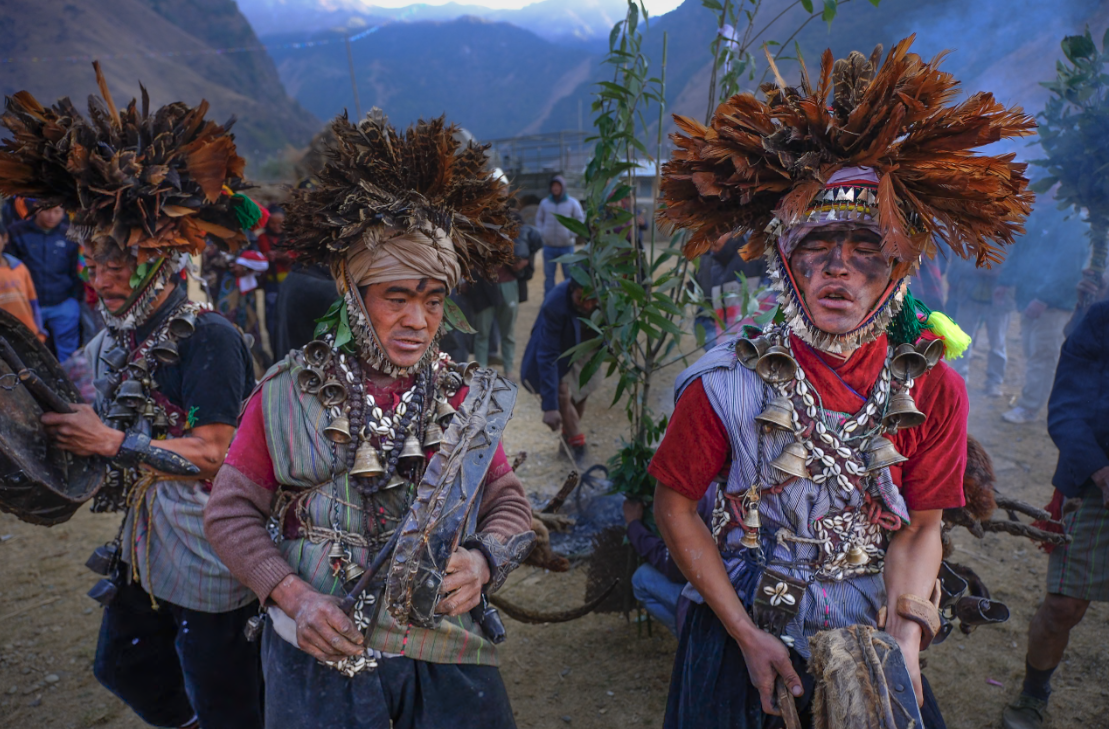
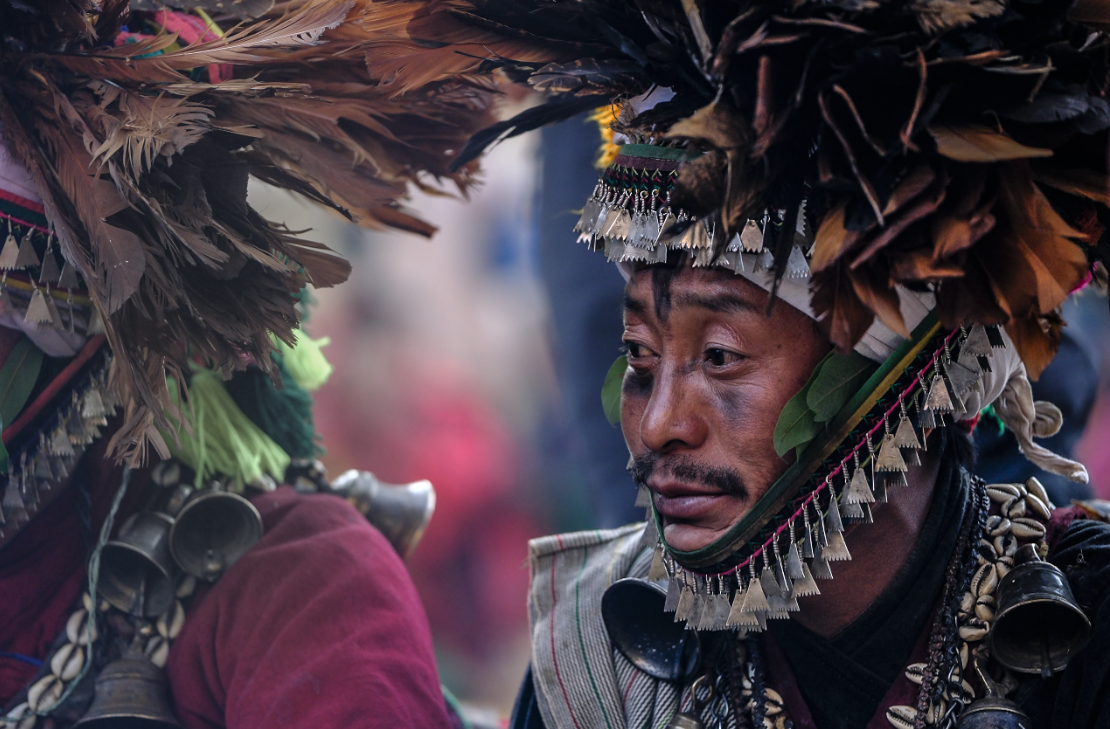
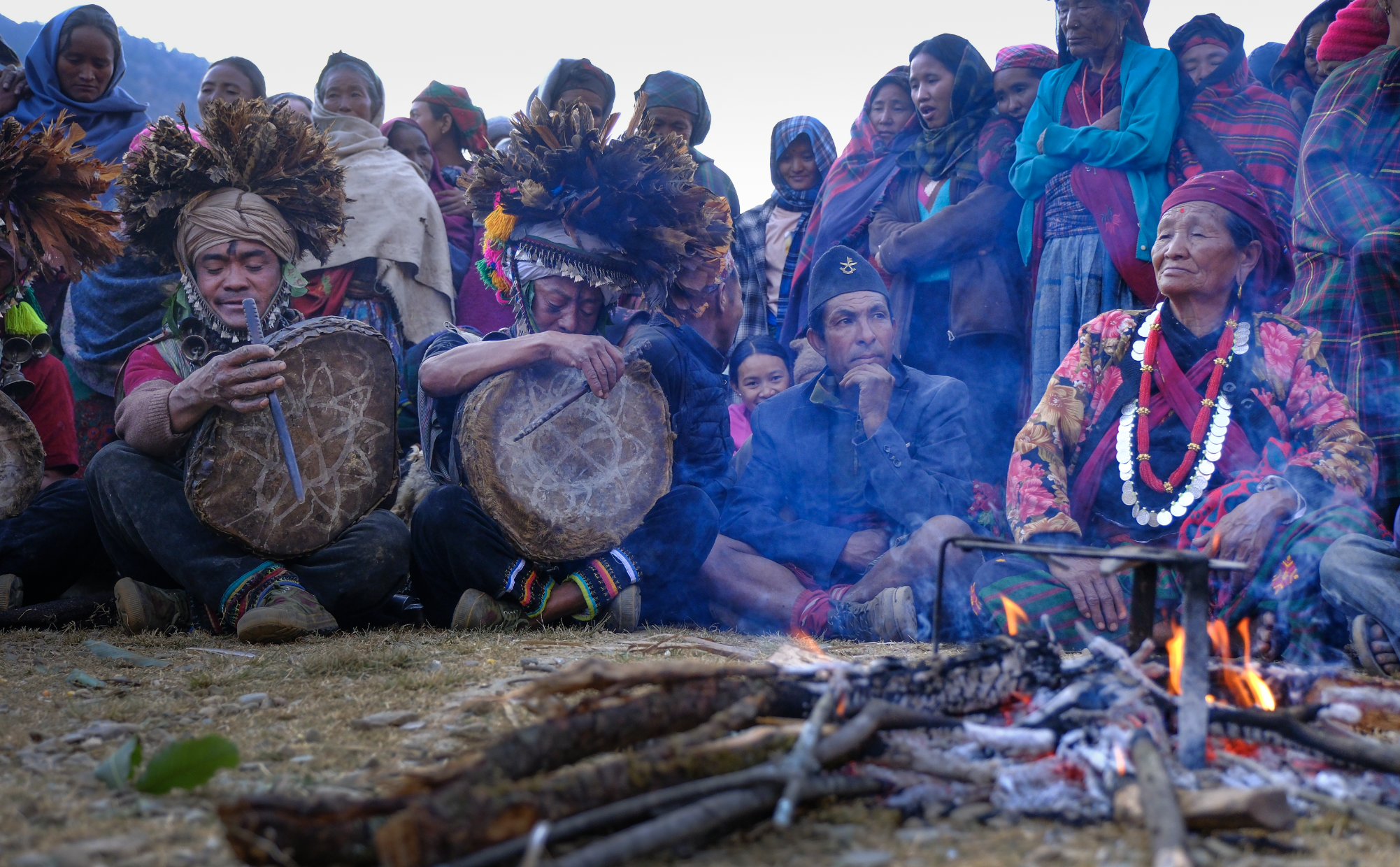
The last time we went to Taksera was in the fall of 2024. Harold Olaf of Giant Loop and his wife Michelle were on that trip as were other Far Xplorer alumni. We went to see something no outsider had ever seen, a traditional Jagery Shaman ceremony. For a full day the shaman and the locals danced and chanted, many in the crowd wearing the heavy wool coats their grandfathers once wore. On this day, some of those men presented their coats to the shaman to receive the black magic that had given their wool suits of armer protective power. Through the translations of my headmaster friend, he told me of a man five generations ago who returned home from the hills with his coat ripped to shreds. The snow leopard that attacked him was no match for black magic and Taksera wool.
Before we left Taksera we went to visit several homes where a multitude of heavy coats were in various stages of construction. A cultural touchstone on the edge of collapse had again been given new life in young, nimble, untangled hands.
Every now and then, Kieth will send me a photo of himself at home in the crush of a snowstorm in his native Alaska. Hands tucked into the opposing sleeves of his Taksera coat, not even bullets or snow leopards could touch him.
I hope you enjoy your Taksera coat, Bill. It has stories yet to tell.