
Why We Ride Royal Enfield 411cc Scrams.
We have always believed in the phrase - Horses for courses. In a world spoiled for choice with regard to motorcycles, we firmly believe the reliable Royal Enfield Scram 411cc motorbike is the perfect bike for what we do, and where we go. We wouldn’t ride anything else. Let us explain why.
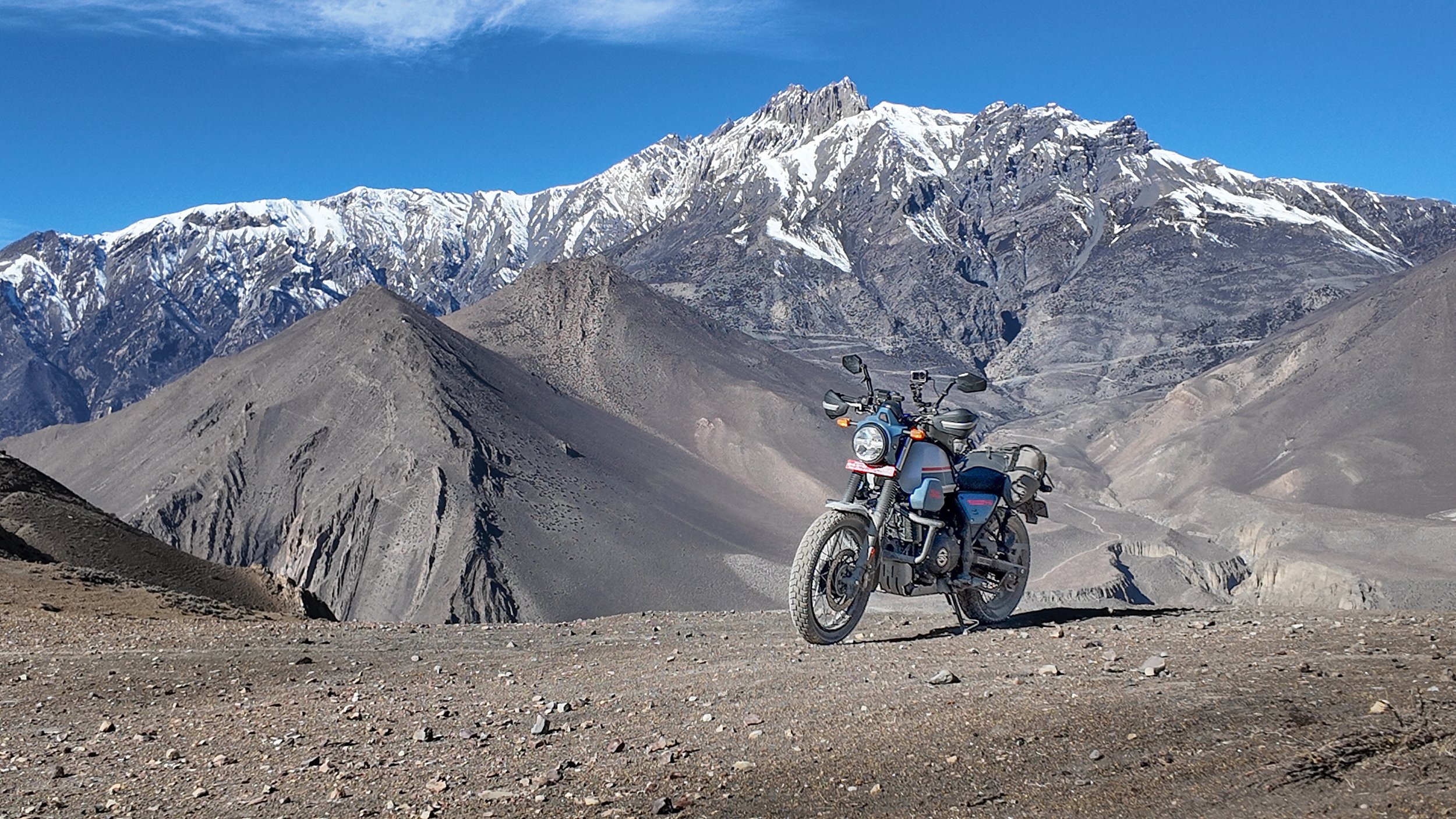
Royal Enfield - A Himalayan Legend is Born
As the oldest and longest running motorcycle brand in the world, Royal Enfield originally started life in England in 1901. With sales never taking full flight, in 1955 production was eventually moved to Chanai, India under the Madras Motor Company. Royal Enfield was from the beginning built for the rigors of police and military duty and paired well to the rough environs of 1950s India. By 1970, the company once flagged in Britain had become wholly Indian. And this is where the story of Royal Enfield truly begins.
When the first roads were cut into the Himalayas some 75 years ago, the first wheeled machines to traverse them were almost always Royal Enfield motorcycles. Favored by surveyors and construction supervisors, these plucky little bikes could go - anywhere. This made Royal Enfield synonymous with rough Himalayan travel.
Royal Enfields, of any variety, are still the iconic machines of the world’s largest mountain range.

The Royal Enfield 411cc Scram - Simplicity Reigns Supreme in South Asia
For much of the world, there is good reason to ride the latest and greatest motorcycles from Japan, Italy, Germany, or Austria. With dealer support around every bend, there is little consequence for a machine festooned with electronics, complicated mechanicals, and highly refined components. That’s not the case in the Himalayas.
In the event your 1300cc wunder-bike were to break down in the more remote corners of Nepal, the nearest dealer with parts and know-how is likely in New Delhi, India. That’s easily a 20-30 hour drive aaway, and no, you cannot order parts and have them shipped to Nepal. A simple $50 part on a KTM, Ducati, Yamaha, or any other bike could waylay your travels for weeks. Need a diagnostic on your Honda Africa Twin? Good luck.
By contrast, Royal Enfield is so ubiquitous around Nepal and all of South Asia, parts and dealers are easily found. Better still, parts are relatively cheap and basic meaning we can pack a near endless supply in our support truck to fix virtually anything - roadside.
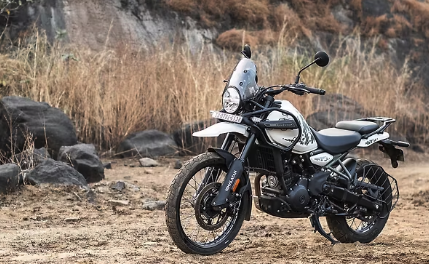
Why Not the Himalayan 450cc?
In an effort to create a bike with more global appeal, Royal Enfield fitted their newest adventure bike with more - complexity. They added water cooling as well as layers of electrical features, trip computers, fuel management systems, and ABS modules. Since these bikes are priced out of reach of most Nepalis ($11,000 in a country where most households earn less than $300/mo), few of these bikes are on the road. That makes parts scarce. Most dealers in Kathmandu don’t even stock basic 450 parts. It also adds nothing we don’t already get from the 411cc bike with regard to power, fuel efficiency, torque, comfort, and durability. We may use them some day. That day is not today. If your 450cc Himalayan were to fail, that would be the end of your ride.
Nepal - It’s About the Riding, Not the Bike
Of the sentiments we have found to be unanimous, all of our past riders agree the Scram 411cc is - perfect - for what we do. Because the roads of Nepal are so narrow, rough, twisty, and challenging, we rarely exceed 50mph. There is no need for 100 horsepower, or even 50. Since we often ride our motorcycles along goat paths, across thread-thin suspension bridges, and through handlebar width streets, no “big bike” would be able to go where we go.
To ride in Nepal is to return to the very essence of travel by motorbike. One piston. No electronics. A fun and torquey machine capable of getting us from sunrise to sunset, and ready to do it again the next day - every day.